Institutional choices influence how people understand risk, accept rules and behave on the road.
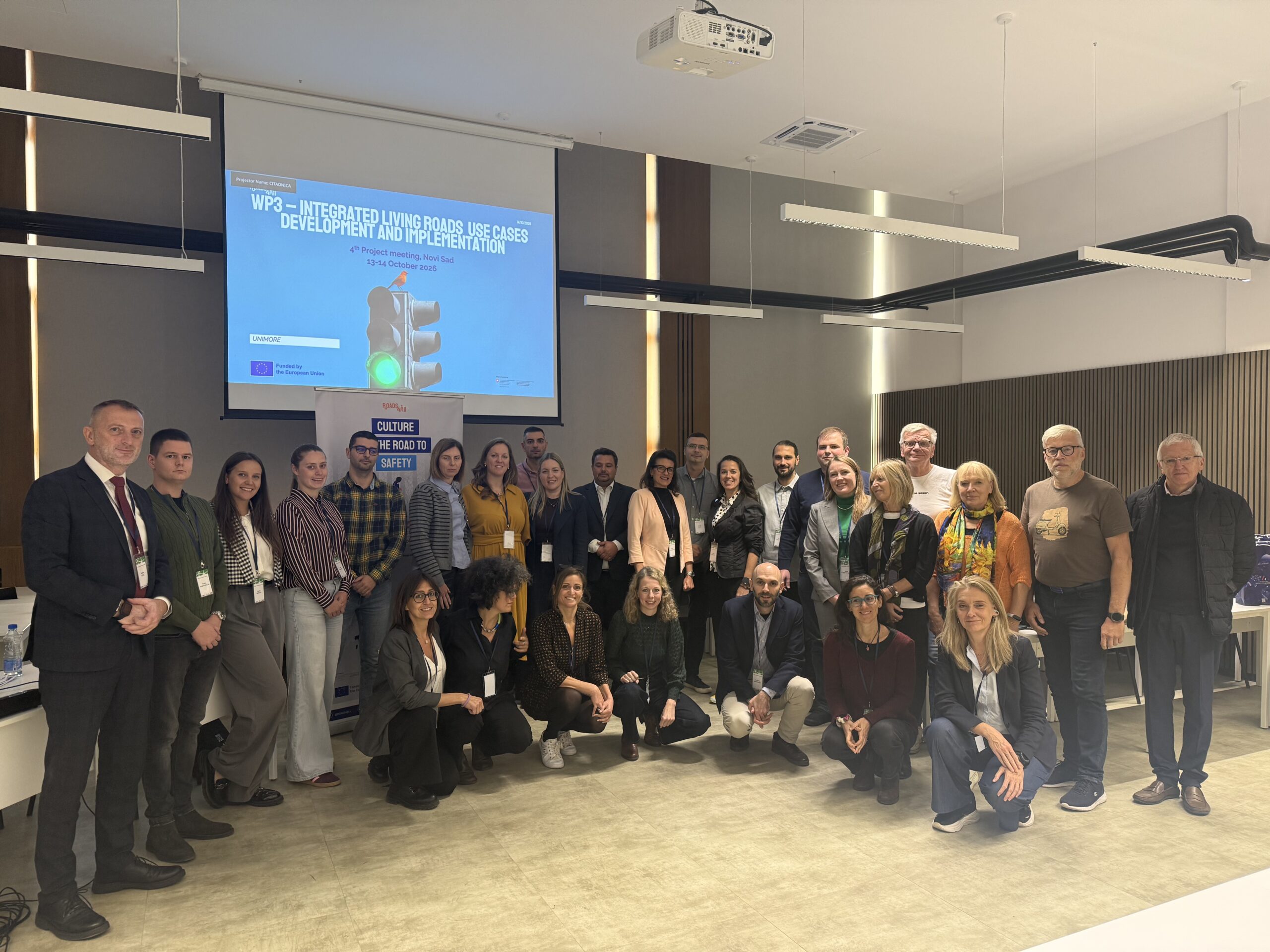
This was the focus of ISINNOVA’s scientific contribution to the XVII International Symposium “Road Accidents Prevention 2026”, held on 14–15 October in Novi Sad, Serbia.
As part of Roads4All’s activities, Riccardo Enei, Senior Researcher at ISINNOVA, presented the paper “Institutions as Cultural Actors in Traffic Safety Culture: A Conceptual and Methodological Framework”, co-authored with Silvia Gaggi, Senior Project Manager at ISINNOVA. The research examines how institutions help shape traffic safety culture through policies, their implementation and their relationships with communities.
How institutions influence road safety
Traffic safety culture encompasses the shared values, beliefs, norms and practices that guide behaviour within mobility systems. These also develop through the institutional environment: the rules adopted, road design, enforcement, communication and opportunities for participation.
The paper combines an analysis of four international road safety approaches with a review of institutional systems in Croatia, Estonia, Germany, Greece, Italy and Serbia, complemented by interviews with experts and stakeholders.
This work produces an analytical framework covering three dimensions:
- Formal: laws, strategies, standards, enforcement and funding mechanisms.
- Operational: implementation capacity, coordination between institutions, infrastructure, information systems and evaluation.
- Cultural: risk perception, shared responsibility, participation and the perceived legitimacy of rules.
The research highlights the importance of the relationship between these dimensions. People may be more likely to understand and accept a safety measure when they recognise its purpose, consider it fair and see it applied consistently.
From strategies to practice
The analysis identifies recurring challenges across the contexts examined: fragmented responsibilities, uneven local capacity, incomplete data integration and a lack of systematic evaluation of interventions.
ISINNOVA’s contribution therefore draws attention to the conditions needed to translate strategies into sustained action: stable resources, clear responsibilities, stakeholder participation and assessment of the effects of measures.
From this perspective, evaluation helps institutions learn from experience and explain their choices. Community involvement also helps them understand how interventions are perceived and what barriers they encounter in everyday life.
Exchanging insights with local stakeholders
Alongside its participation in the Symposium and the project meeting, ISINNOVA organised a mutual learning workshop with local stakeholders.
One of the messages emerging from the discussion concerned the complexity of the factors influencing traffic safety culture. Understanding behaviour requires consideration of the social context, alongside individual characteristics such as age and gender.
The discussion also highlighted the importance of education on safe behaviour from school age, as part of the process of developing risk awareness and responsibility.
Another topic concerned new technologies and data availability. Georeferenced information on crashes and mobility patterns offers significant opportunities to understand problems and inform interventions. However, barriers to its full use remain, including incomplete coverage and interoperability issues, meaning difficulties in exchanging and integrating data across different systems.
The research presentation and stakeholder exchange thus highlighted two connected aspects of Roads4All’s work: understanding how institutions influence safety culture and identifying the conditions needed to translate this knowledge into local practice.
Learn more about the Roads4All project.